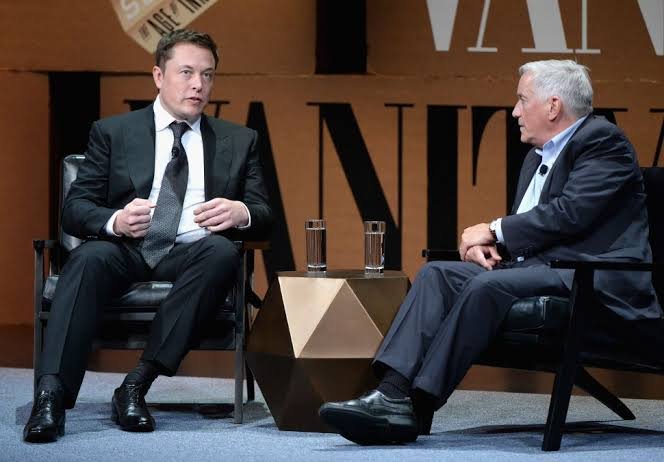
Elon Musk predicts that advances in artificial intelligence and robotics could transform the global economy, potentially making money less important as energy, computing power, and physical resources become the real measures of wealth.
Elon Musk has sparked fresh debate about the future of money after suggesting that rapid advances in artificial intelligence (AI) and robotics could eventually make traditional currency largely irrelevant.
Speaking on the debut episode of Walter Isaacson’s podcast The Builders, released October 20, Musk outlined a future in which technological progress creates such extraordinary abundance that people may no longer need to worry about money in the way they do today.
Instead, the billionaire entrepreneur suggested that wealth could increasingly be understood through fundamental physical measurements, including energy, power, and mass.
“I think currency will be measured in fundamental physics metrics like, you know, power, like wattage and tonnage, mass and energy,” Musk said.

Elon Musk Explains Why Money Could Lose Its Importance
Musk’s prediction is rooted in his belief that AI-powered automation and advanced robotics will dramatically increase humanity’s ability to produce goods and services.
As robots become capable of performing more tasks and AI systems improve productivity, the cost of producing many essential products could fall significantly. In such a scenario, goods that are expensive or difficult to obtain today might become widely accessible.
The idea challenges traditional economic assumptions, where money serves as a primary way to measure value, exchange goods, and distribute resources.
Musk’s vision suggests that in a highly automated economy, the ability to generate and use energy, operate machines, and access physical resources could become more important than the amount of money someone holds.
However, this remains a prediction about a possible future rather than a confirmed economic outcome. Even if technology makes production dramatically cheaper, resources such as land, energy infrastructure, and certain raw materials could remain limited.
AI and Robotics Could Transform the Global Economy
Artificial intelligence and robotics are central to Musk’s long-term vision of a technology-driven future.
AI systems are increasingly being developed for research, manufacturing, logistics, software development, and other industries. Meanwhile, companies are investing in robots designed to perform physical tasks that have traditionally required human labor.
Musk has repeatedly argued that combining these technologies could lead to substantial productivity gains.
If machines eventually produce most goods and provide many services at a very low cost, societies could experience a level of abundance that today’s economic systems are not designed to handle.
Such a transformation could reshape employment, wages, consumer spending, and the relationship between work and income.
Still, technological progress alone would not guarantee that everyone benefits equally. How the gains from automation are distributed could prove just as important as how much wealth the technology creates.
What Would Happen to Elon Musk’s Billion-Dollar Fortune?
Musk also discussed his personal wealth, which is largely tied to his ownership stakes in companies including Tesla and SpaceX.
Rather than presenting his fortune simply as money to spend, he has emphasized ambitious long-term goals involving sustainable energy, technological development, and the expansion of human civilization beyond Earth.
Tesla focuses on electric vehicles, energy storage, and related technologies, while SpaceX is working to expand spaceflight capabilities and advance Musk’s vision of making humanity multiplanetary.
These ambitions involve substantial investment in manufacturing, infrastructure, research, and energy systems.
Musk’s comments reflect a broader distinction between financial wealth and the physical resources required to accomplish large-scale technological projects. In a future shaped by advanced automation, he suggests, the ability to produce energy and build infrastructure could become an increasingly meaningful measure of economic power.
Could Robots Help Solve the National Debt?
The conversation also touched on government finances and the possibility that technological advances could change how countries address their debt burdens.
Musk’s broader argument is that dramatic improvements in productivity could expand economic output and potentially change the constraints governments face today.
In theory, if automation increases production and economic growth substantially, governments could gain access to a larger economic base from which to collect revenue.
However, robots would not automatically eliminate national debt. Government borrowing, interest payments, taxation, inflation, and public spending are influenced by complex economic and political factors.
Greater productivity could help an economy grow, but the outcome would depend on how quickly the technology develops and how governments and societies respond.
AI Safety and Musk’s Vision for the Future
Beyond money and economic abundance, the podcast discussion covered AI safety and Musk’s brief stint in government.
AI safety remains a major topic of debate as increasingly capable systems are developed and deployed. Supporters of rapid AI development point to potential breakthroughs in medicine, scientific research, and productivity, while critics warn about risks involving employment disruption, security, accountability, and the control of powerful systems.
Musk’s vision raises a fundamental question: if machines eventually handle much of the work needed to sustain society, how should people organize their economies and define prosperity?
The answer will depend not only on technological advances but also on public policy, access to resources, and decisions about who benefits from automation.
A Future Where Energy Matters More Than Money?
Musk’s comments offer a glimpse into a possible future in which traditional financial measures become less central to economic life.
If AI and robotics make goods and services dramatically cheaper, the ability to generate electricity, operate advanced machinery, and access essential materials could become increasingly important.
Yet money may continue to play a role even in a world of extraordinary abundance. Scarce resources, competing demands, ownership, and distribution would still need to be managed in some way.
For now, Musk’s prediction remains a provocative vision rather than an established forecast. Whether technology ultimately makes money less important will depend on how far automation advances and how societies adapt to the changes it brings.
The bigger question is no longer just how much wealth humanity can create, but how that wealth and abundance will be distributed in an AI-powered world.
What do you feel about this post?

Like

Love

Happy

Haha

Sad